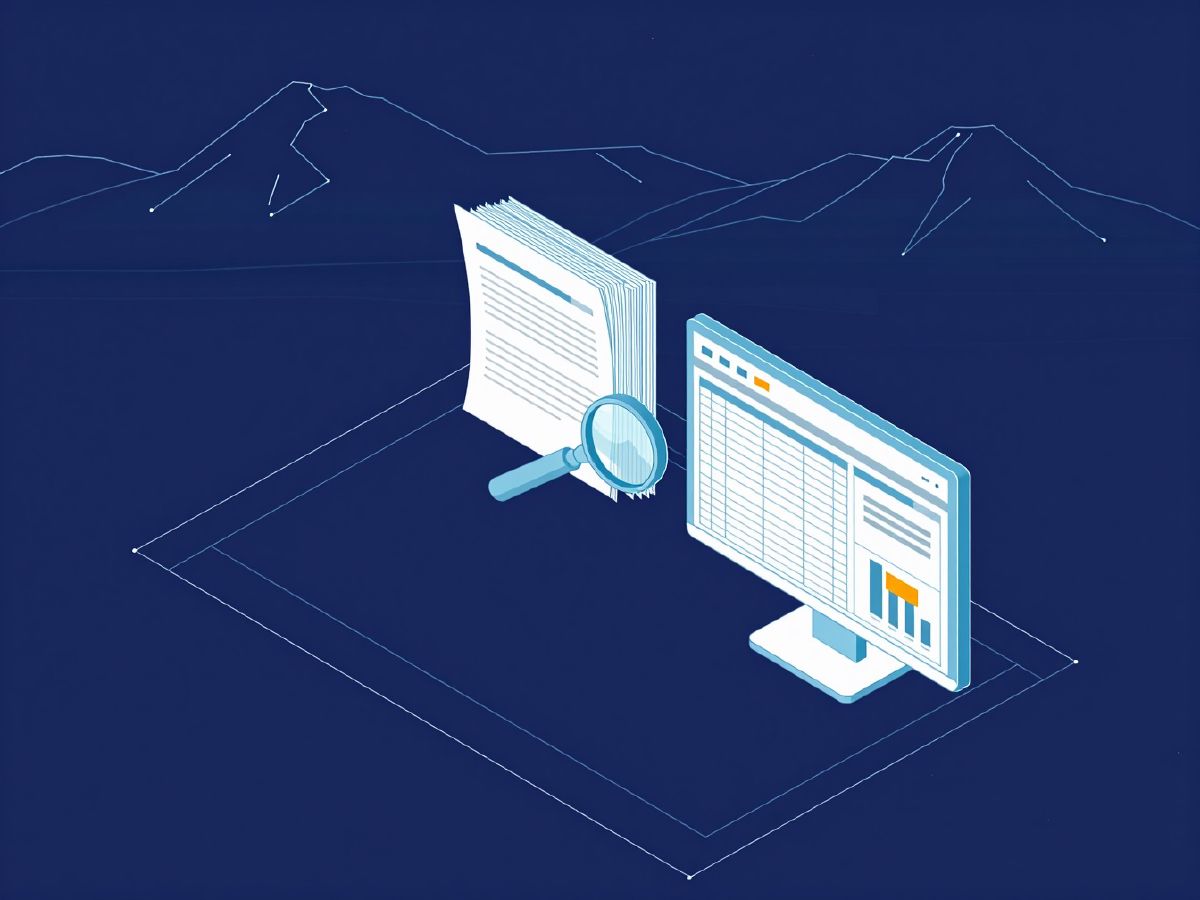
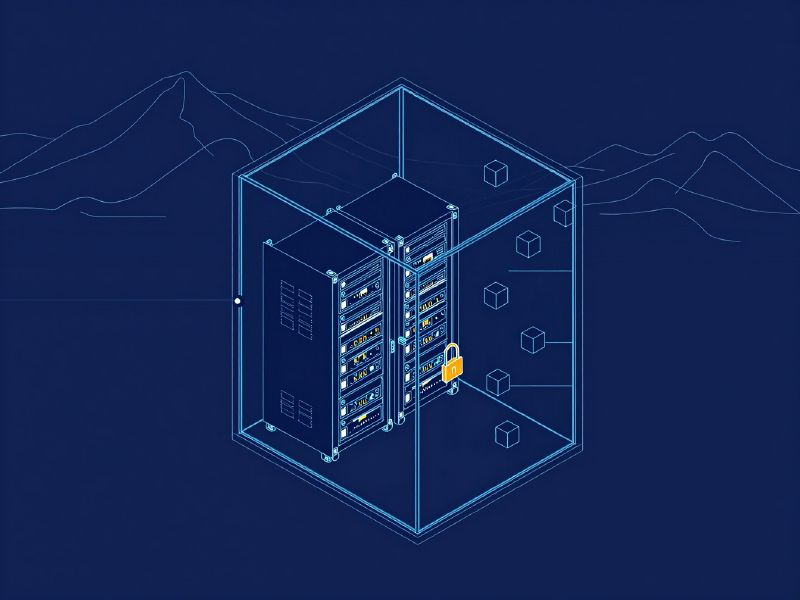
AI is the work we lead with. We build systems that read documents people used to type up by hand, gather and summarise evidence, carry a multi-step process end to end, and modernise code nobody else wants to touch. We run them on infrastructure you own when the data is too sensitive to send anywhere else.
That last part is why clients come to us for it. We have spent more than a decade building and hosting systems that hold citizen, financial and legal records, so privacy, audit trails and a security review before release are the default, not an upgrade.
We scope these projects the same way we scope everything else: understand what you’re actually trying to automate or connect before choosing a model or a chip, build and test against that, then hand over something your team can run. That means monitoring, documentation and support behind it, not a proof of concept that stops working once we leave.
What these projects usually are
Several disciplines share one page because they usually share one project: a line that needs sensors on it, a model to read what they produce, and a screen a supervisor can act on. In practice the work takes four shapes:
- A decision somebody makes over and over. A model reads the data and proposes the answer; a person still signs it off. The value is in the hundredth repetition, not the first.
- A pile of documents nobody can search. Paper statements, depositions and archived web pages are read by a model, checked, and turned into something a team can query, share and explain.
- A workflow nobody should be doing by hand. Form routing, document classification and approval chains, or moving data between two systems that were never going to talk to each other. This is increasingly handled by an agent that completes the task rather than a script that moves a file.
- A conversation at volume. WhatsApp and on-site chatbots taking first-line questions, bookings and order status, handing over to a person the moment the question stops being routine.
- Something physical that needs to report. Sensors, firmware and a board design, so equipment in the field produces data you can act on rather than a light on a panel nobody is watching.
How we decide it’s worth building
Automation fails in a specific and predictable way: it works in the demo, gets handed over, and is quietly abandoned within a quarter. We scope against that outcome.
- The problem comes before the technique. An off-the-shelf API, a trained model, or a rule someone could have written in an afternoon are all acceptable answers. We pick the one that leaves you with less to maintain, not the one that’s more interesting to build.
- The prototype runs on your data. Real inputs, real edge cases, real volume. A proof of concept tested on a clean sample tells you nothing about the Tuesday it breaks.
- Somebody owns it after we leave. Named at the start, trained during handover, with documentation and monitoring behind them. If nobody on your side can own it, that’s worth knowing before the build, not after.
- We’ll say when it isn’t worth it. Some processes are cheaper to leave alone. That’s a legitimate outcome of the discovery stage, and we’d rather reach it in week one than month six.
Longer term, the same team handles the hosting, monitoring and support underneath (see cloud hosting & AMC), so an automation that runs in production has someone watching it.
In detail
Three of these have a page of their own
Agentic systems, chatbot work and hardware engineering come up often enough, and differ enough from the rest, to be worth reading about separately.
Agentic systems & workflow automation
Agents that carry a multi-step process end to end, with the approval boundaries and audit trail defined before anything runs unsupervised.
See the work →WhatsApp & chatbot automation
Chatbots on the app people already have open, for complaints, bookings and status queries, integrated with the systems that hold the answers.
See the work →Embedded, IIoT & hardware
Firmware, microcontroller work and custom PCB design, from a proof of concept through to a board you can manufacture.
See the work →What's included
How we scope this
Document AI
Scanned, handwritten or photographed records read by a vision model, then checked by a reasoning pass that reconciles what was extracted. The result lands in a system people can search, review and share rather than a folder of PDFs.
Private, self-hosted AI
Open models deployed on infrastructure you own, for data that can't be sent to a third-party AI service, such as legal, financial, health or citizen records. Hardened, monitored and maintained like any other system we run.
AI-assisted modernisation
Legacy applications upgraded step by step with AI development tools: unsupported code rewritten, tests written before anything changes, and security and compliance signed off at each step rather than at the end.
Evidence and research pipelines
Crawlers and collectors that gather material within the source's limits, models that read what came back, and a report written for the matter in hand rather than a raw dump.
Artificial intelligence
Machine learning models, robotic process automation, AI-assisted management software and chatbots built around a real decision or workflow, not a demo.
Machine learning
Deep learning, custom ML models and data mining, taken through requirements, training, integration and monitoring rather than handed over as a one-off script.
Industrial IoT
Sensors and devices connected for data acquisition, production optimisation and predictive maintenance, with security and compliance built in from the start.
Embedded systems
Custom firmware, RTOS work, sensor and actuator integration, and hardware/software testing for devices that run in the field, not just in a lab.
Hardware design
Circuit and PCB design, component selection and prototyping, from specification through to a tested, documented physical build.
Chatbots & conversational support
WhatsApp and on-site bots for first-line questions, appointment booking and order status, with CRM integration and a clean handover to a person the moment the bot is out of its depth.
Agentic systems & workflow automation
Agents that carry a multi-step process end to end (support triage, order and returns handling, back-office routing), with the boundaries, approvals and audit trail defined before anything runs unsupervised.
Data warehousing & pipelines
A warehouse your reporting and your models can both read from: ingestion from the systems you already run, a schema that survives new sources, and history you can query rather than reconstruct.
How we work
The process, in order
- 01
Discovery
We understand what's actually being automated or connected before choosing a model, a framework or a chip.
- 02
Prototype
A working proof of concept tested against real data or hardware, not a slide deck.
- 03
Build & integrate
A production build integrated with your existing systems, with monitoring in place from day one.
- 04
Handover & support
Documentation and support so your team can run it, not a proof of concept that stops working once we leave.
AI in production
What we've built with AI
Recent engagements, described by what they do rather than who they were for.
Document AI · finance
Paper bank statements to a reviewable dashboard
Scanned statements read by a vision model, then a reasoning pass to extract and reconcile the figures, loaded into a dashboard built for the job. Manual spot checks verified the output; the team now retrieves, shares and explains the records instead of leafing through paper.
Legal · privacy-first
Private eDiscovery for a law firm's clients
Court depositions and case material turned into an internal, privacy-focused search and review system the firm's lawyers use for their clients. The documents never leave infrastructure the firm controls.
Research · evidence
Evidence gathering from web archives
A crawler working through the Wayback Machine within its rate limits (API first, then the specific files needed), with models reading what came back and producing custom reports for each client's matter.
Modernisation · finance
A 2012 financial system, upgraded with AI tooling
A large legacy application handling heavy financial data, taken over and upgraded step by step to current standards using AI-assisted development. Unsupported code was rewritten, and security, testing and compliance were signed off at every step rather than at the end.
Infrastructure · private AI
Self-hosted AI for privacy-focused clients
Open models deployed and run on cloud infrastructure the client owns, for organisations whose data can't be sent to a third-party AI service. We handle the deployment, the hardening and the monitoring afterwards.
FAQ